|
|
|
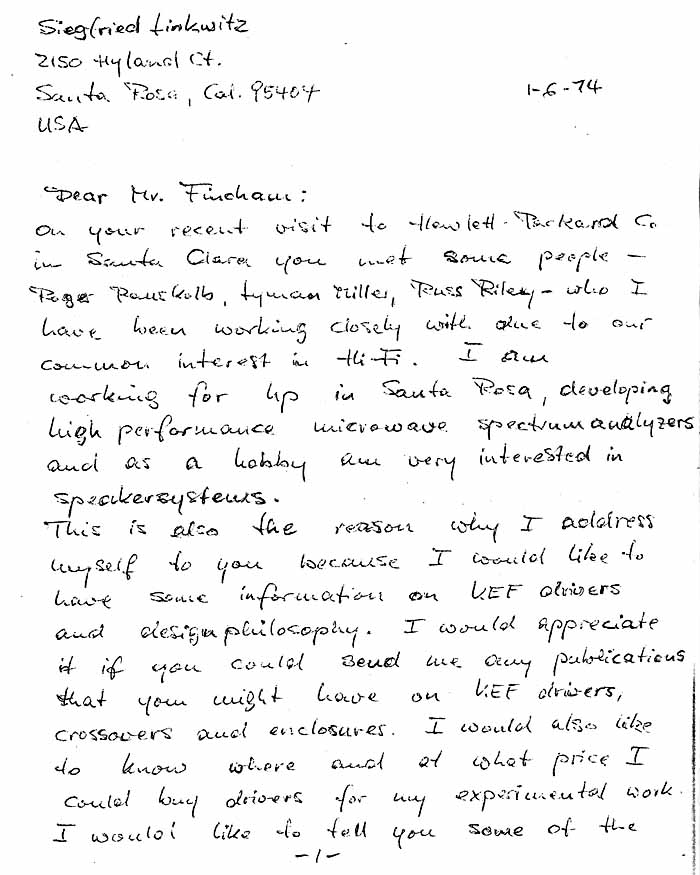
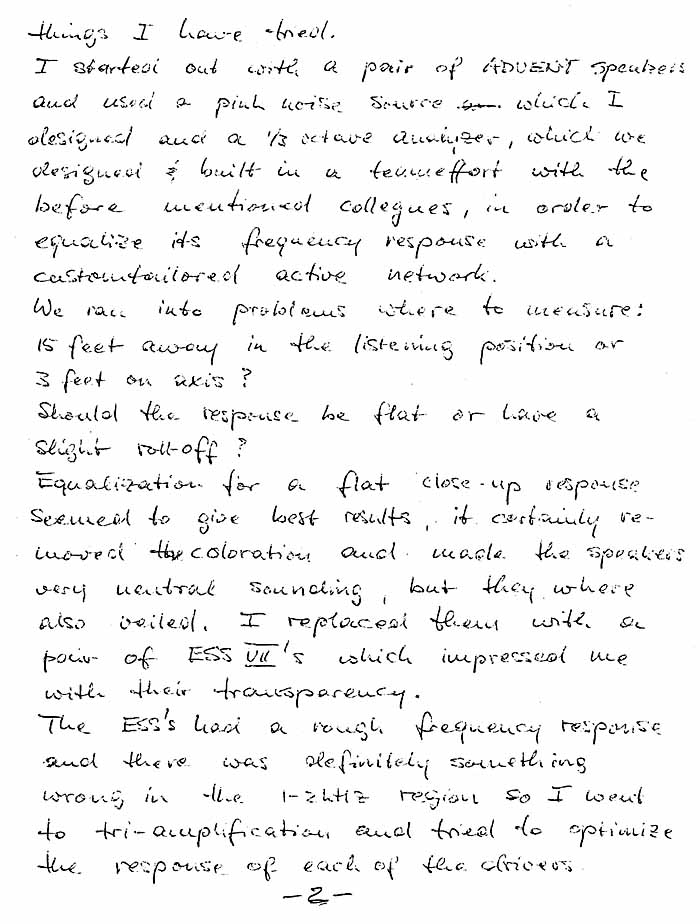
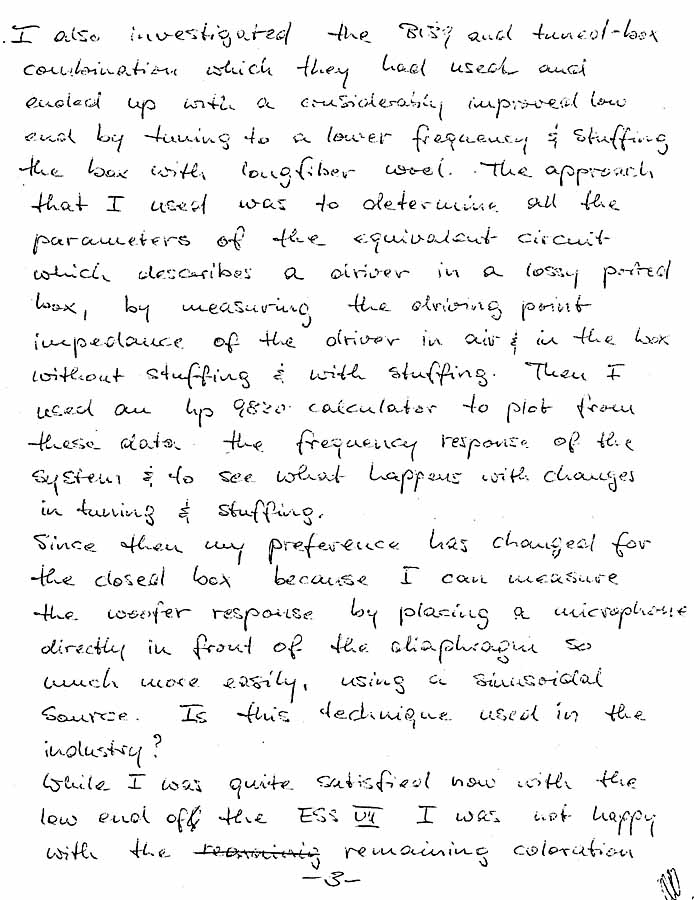
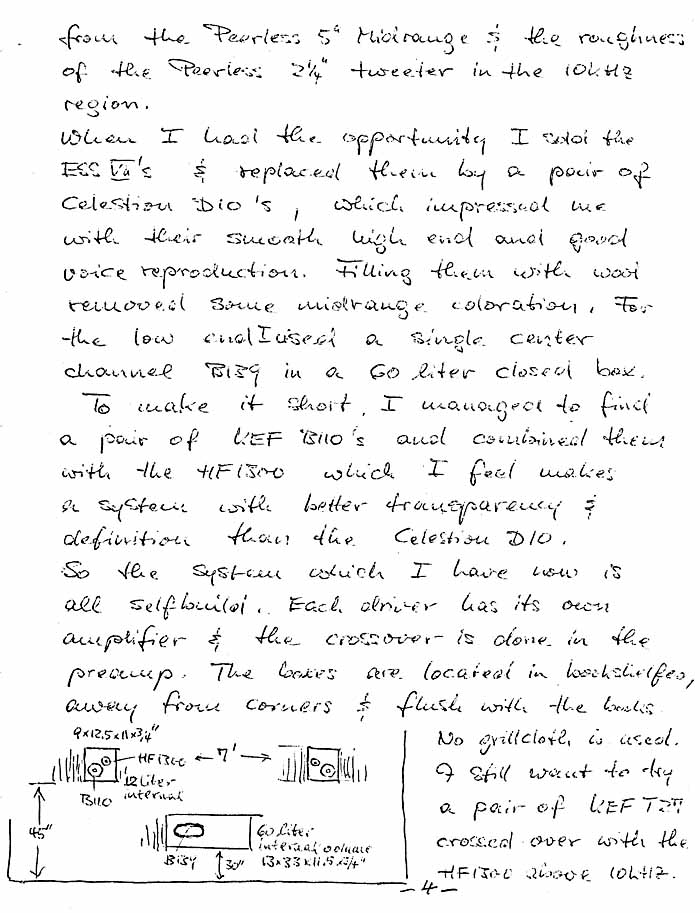
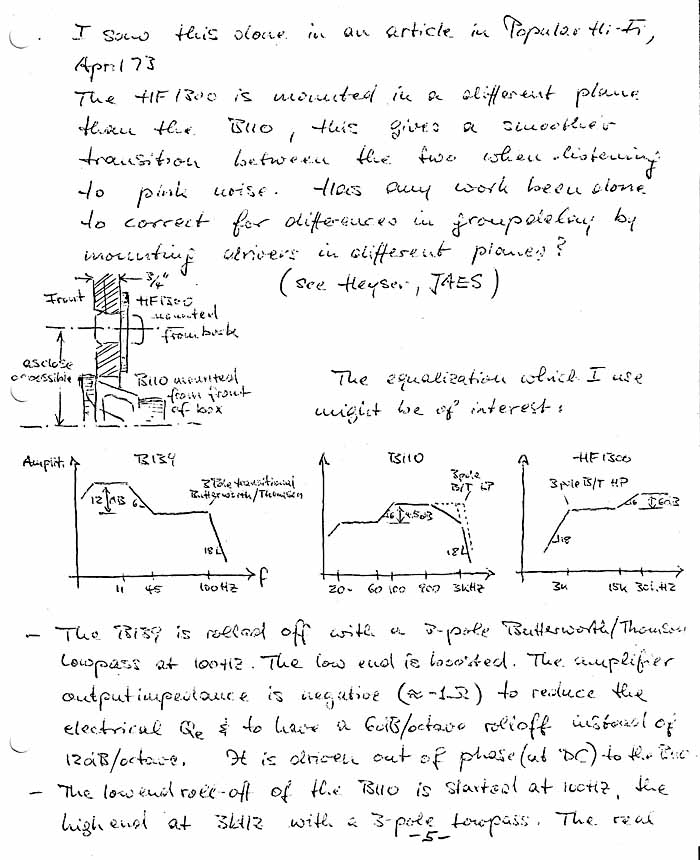
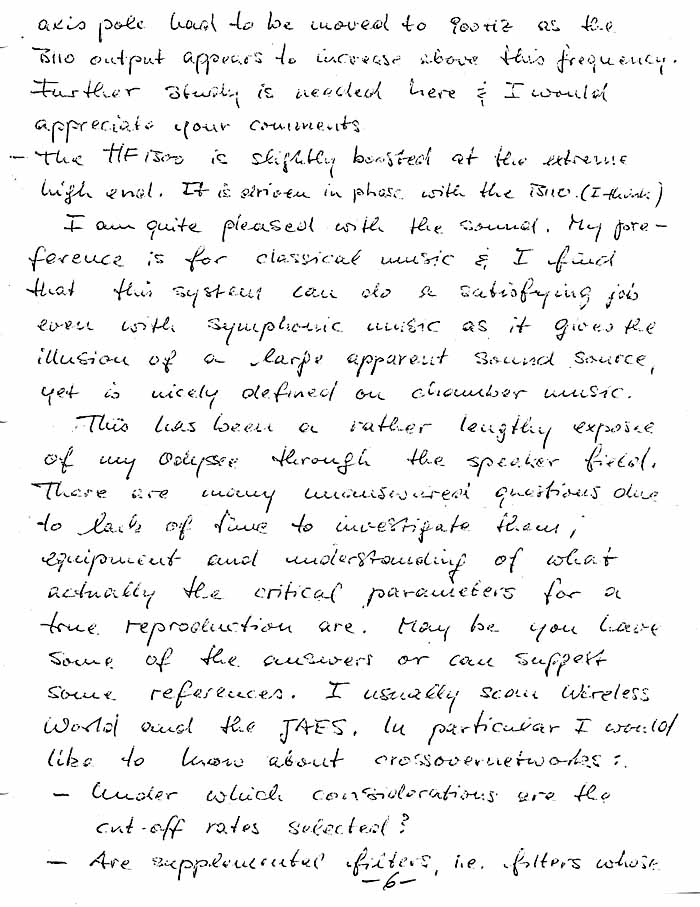
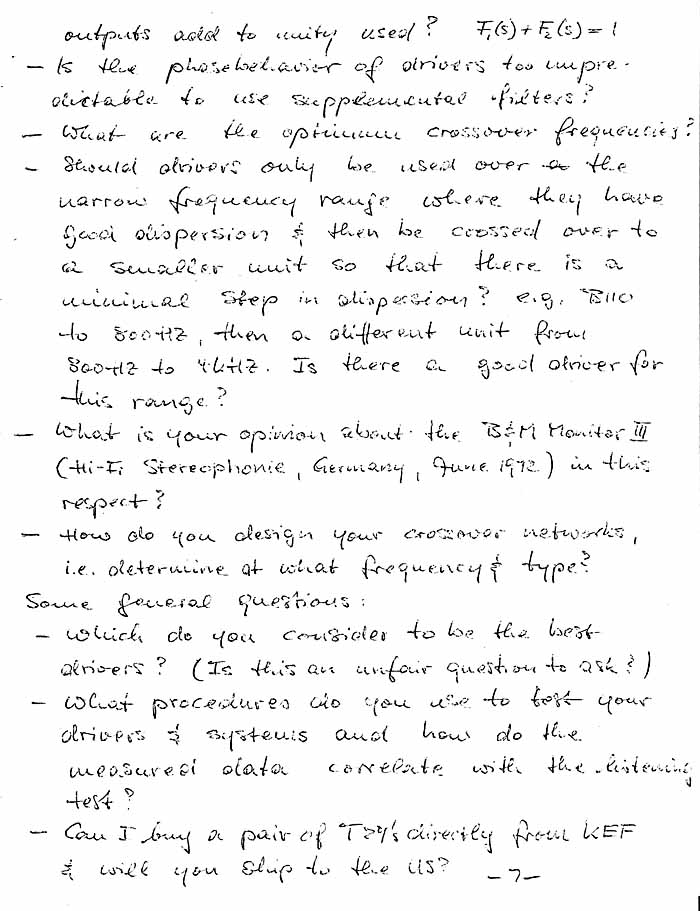
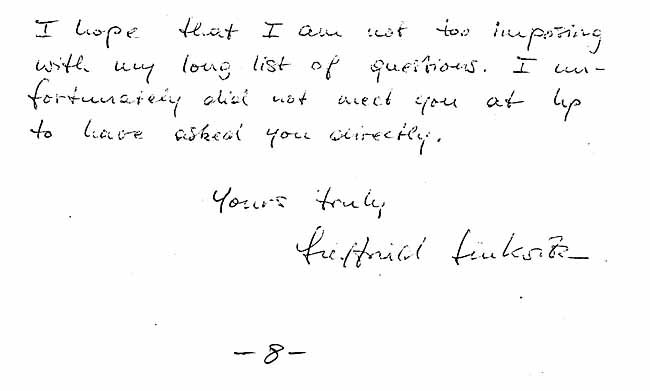
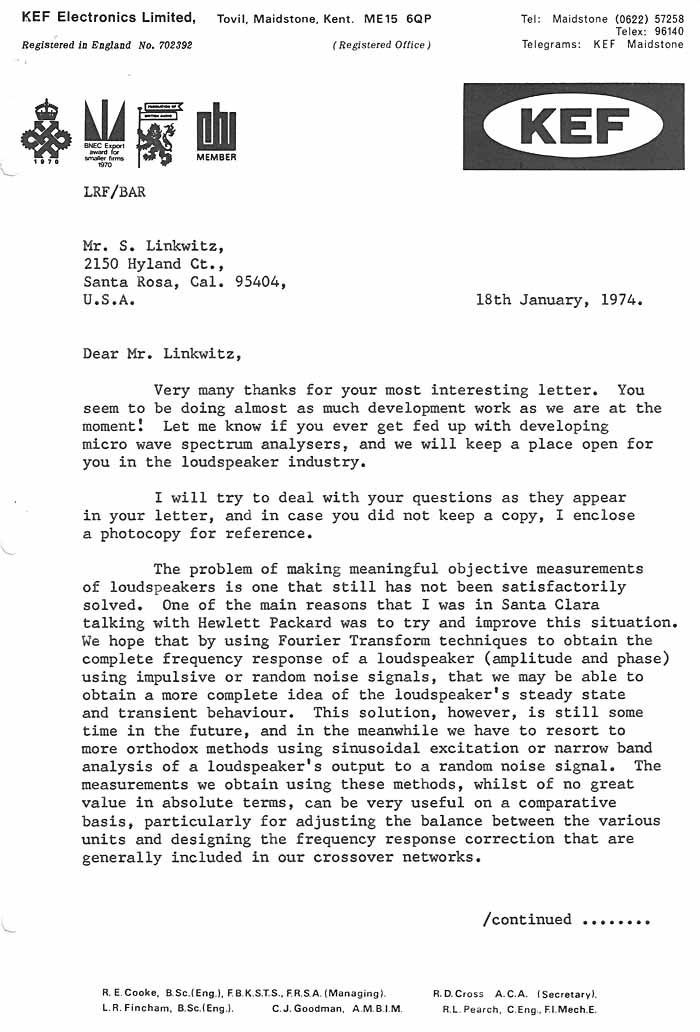
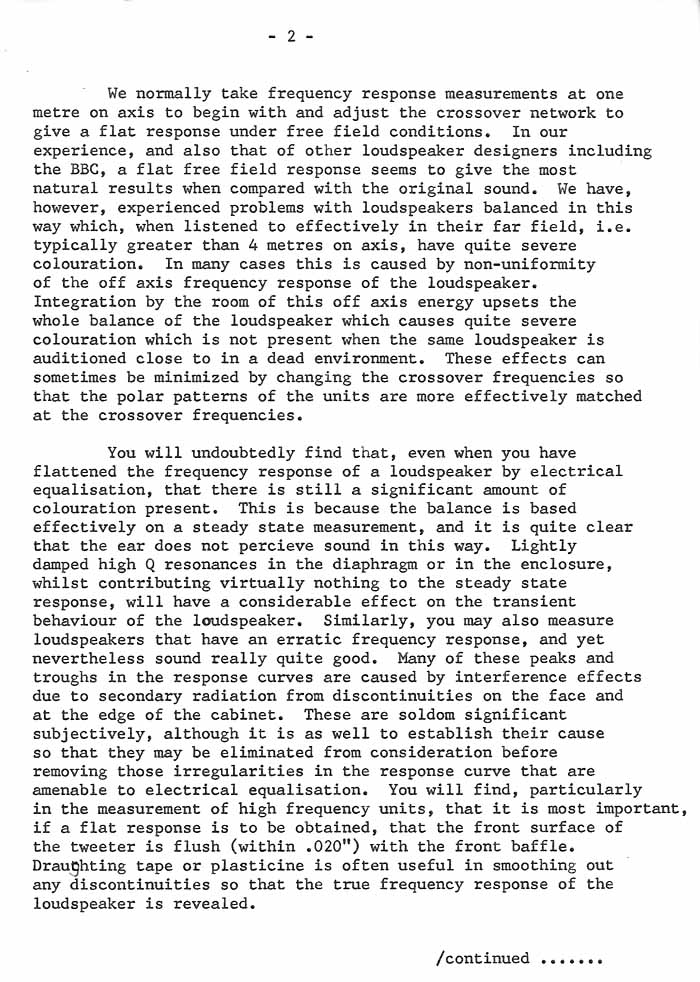
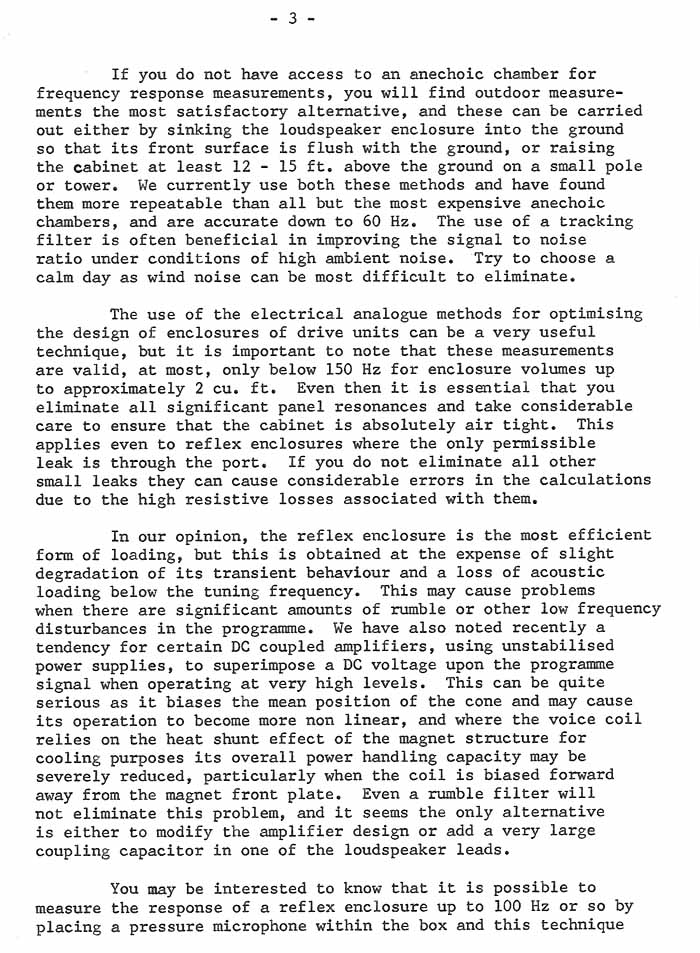
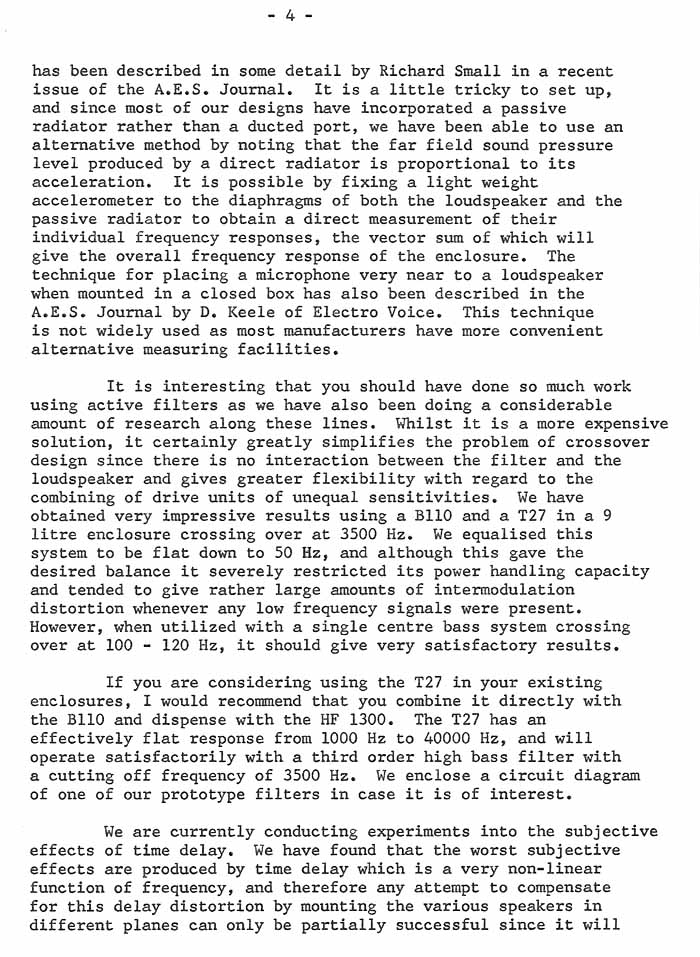
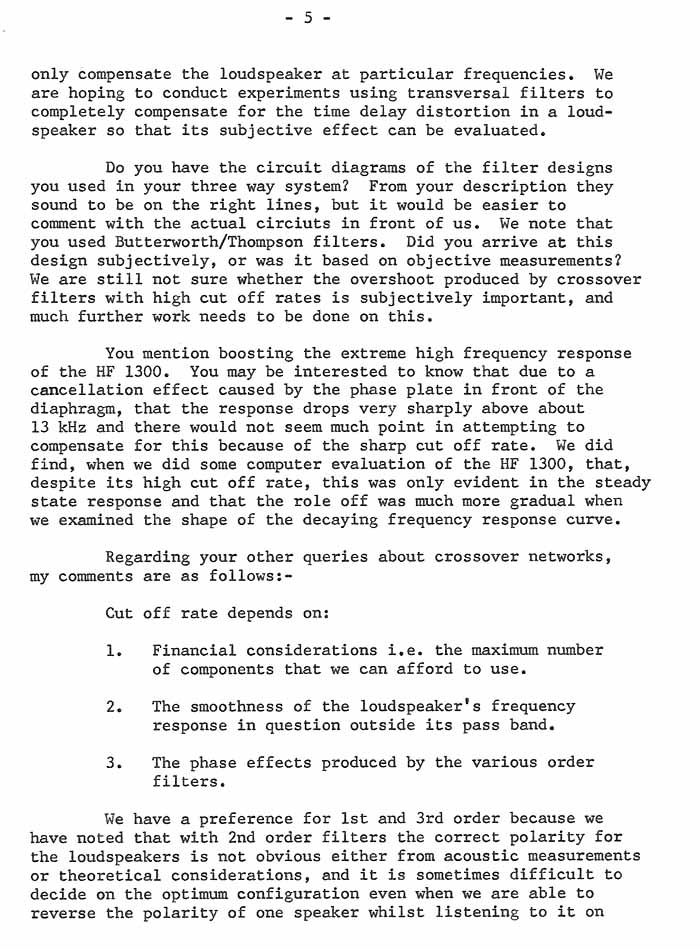
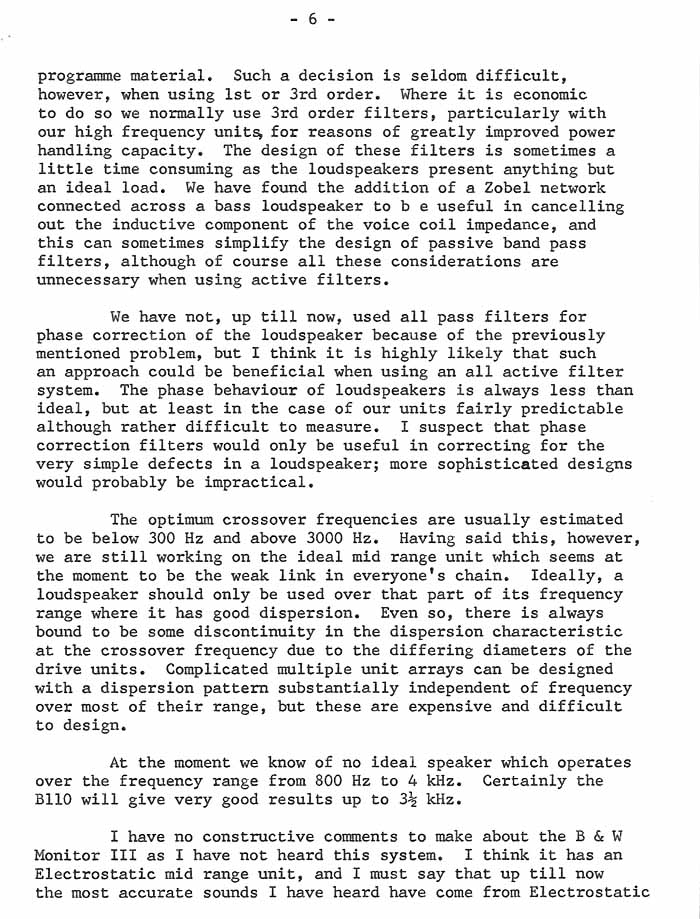
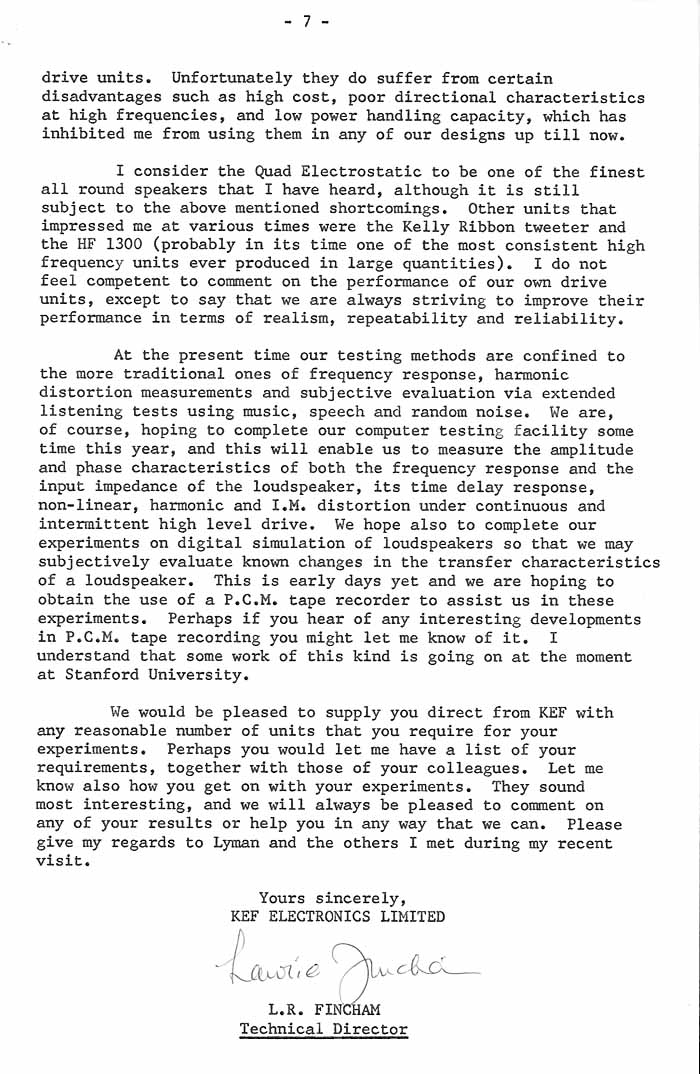
First correspondence between SL and Laurie Fincham in 1974Here is my first contact with a pro in the audio industry after I and several colleagues at HP had experimented extensively with improving commercial loudspeakers amongst other projects during lunch time and after work We called that G-jobs (i.e. Government jobs) for our learning and enjoyment. HP actually encouraged such activity because the experience gained frequently paid back, though probably not from loudspeaker projects. I had been in R&D for 13 years and our work was to develop RF & Microwave test equipment such as signal generators, network analyzers and spectrum analyzers with measurement and performance capabilities that were not available before. It had nothing to do with audio, except that 20 MHz to 20 GHz covers about the same range in wavelengths as 20 Hz to 20 kHz. Only the medium is different. Loudspeakers can be looked at as very broadband antennas and there are many analogies when it comes to designing for a specific polar response. Reading the letters reminds me of where my understanding of loudspeakers was at that time and what an accomplished professional in the field had to say about loudspeaker design. We have since resolved much that was in question and gained a broader understanding of the role of the loudspeaker in generating phantom sound sources. (e.g. Publications #25)
Laurie promptly responded and many letters followed. I still have a 2" thick folder from that time.
|
|
| ||||