What's new


HOME


Products

ORION - PLUTO
by Wood Artistry

ORION - EU

ORION - BR

ORION - PLUTO
by the sea

Do-It-Yourself


Concepts

Accurate Stereo

Loudspeakers

Crossovers

Room acoustics

Sound
reproduction

Room optimized
stereophonic
reproduction
 

Recording for stereo

Design of
loudspeakers

Issues in 
speaker design


Projects

ORION
challenge

ORION++
Concert Hall

PLUTO
omni speaker

PLUTO+
subwoofer

THOR
subwoofer

PHOENIX
dipole speaker

     Active filters

     Microphone

     FAQ

Reference
earphones

Surround
sound

Loudspeaker
evaluation


Resources

Website CD

Toneburst CD

Demo CD

Publications

Music

Links

Other designs

Site map

About me


Conclusions


HOME


--------------------
ORION
PLUTO
Users Group


--------------------
LINKWITZ
RENTALS


--------------------
Digital Photo
Process
es


What's new


Digital Photo Processes

-- Introduction -- Lens & image -- A/D conversion -- Lumix & Leica --  Sharpness -- CCD noise1 -- CCD noise2 -- 


Lens sharpness comparison

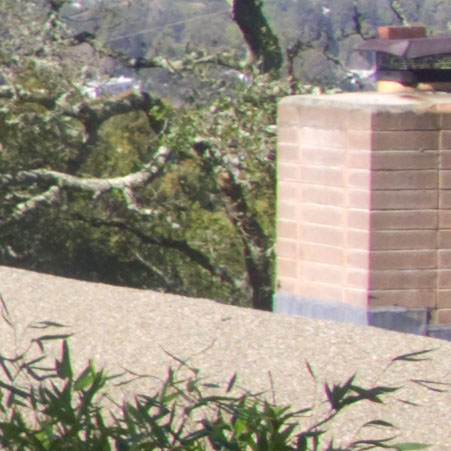
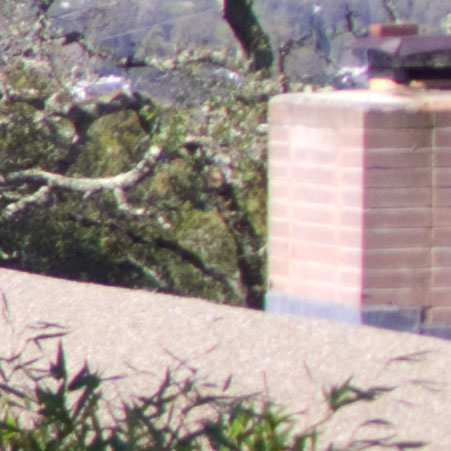
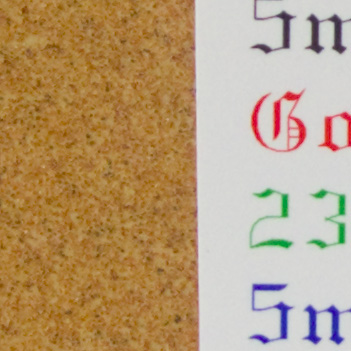
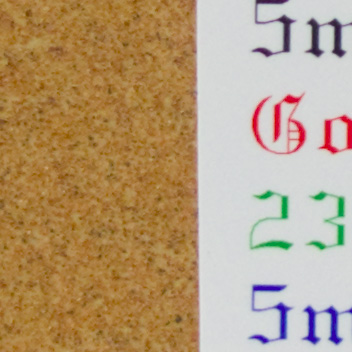
The lenses for the Lumix and Leica camera models that are investigated here have been manufactured by Panasonic. The question is about their specifications. Do the Leica models have lenses with tighter tolerances than the Lumix models? In some test shots I noticed that the Leica D-Lux 3 gave a blurrier picture at the edge than the Lumix LX2. The cameras were tripod mounted, no image stabilization, manual focus to infinity, 2 second shutter delay. So there was no motion blur. I took multiple landscape pictures with all four cameras. Their sharpness distribution over the picture area did not change significantly with focal length or aperture used. Seeing how the gravel roof also showed the lack of sharpness, I decided to take four close-up pictures of sand paper, one for each camera. 

 
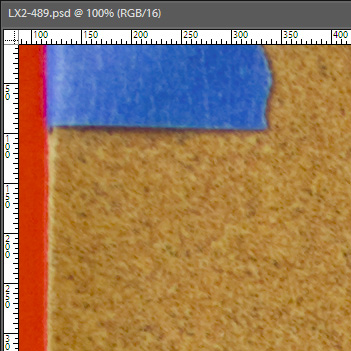
LX2, 16:9 right edge, 28 mm, ACR defaults,100%

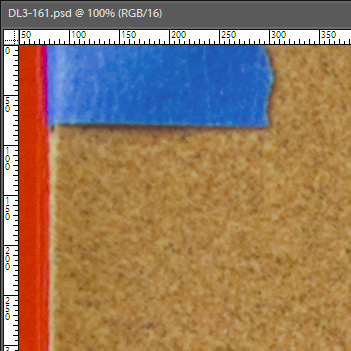
D-Lux 3, 16:9 right edge, 28 mm, ACR defaults, 100%


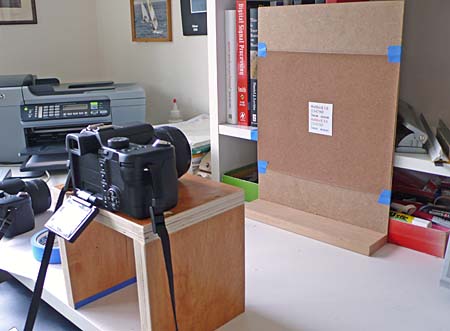
Test setup

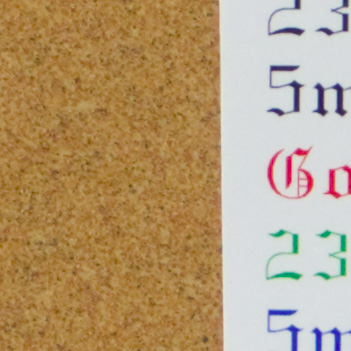
The rear surface of the camera is at a distance of 18" from the sand paper. The lettering in the center of the sand paper is in Gothic font, size 18. The sand paper is Norton 100C Medium Grit for wood sanding. Its size is 11"W x 9"H.

The focal length is set so that the paper almost fills the width of the 4:3 frame. Small equal width gaps on each side, as observed on the LCD, assure that the camera sensor is parallel to the paper surface.

The camera's 2 s self-timer is used and no image stabilization.


Test results

In all cases the exposure time was 1/13 s, the aperture f:3.2 at ISO 100. The focal length was 9.2 mm for the large cameras and 8.7 mm for the small ones. The RAW files were processed in ACR with its default settings. Thus there is minimal Sharpening applied (25, 1.0, 25, 0) and Noise Reduction 0 for Luminance and 25 for Color. So these pictures should only be evaluated relative to each other and not for optimum sharpness. The center of the image was always the sharpest region. The lower right corner was the worst for all four cameras, which is probably a coincidence.

Upper left corner Center Lower right corner
1 - LX2 2 - LX2 3 - LX2
4 - D-Lux 3 5 - D-Lux 3 6 - D-Lux 3
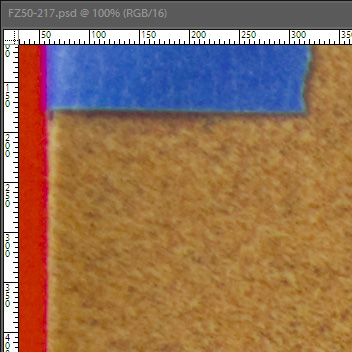
7 - FZ50 8 - FZ50 9 - FZ50
10 - V-Lux1 11 - V-Lux 1 12 - V-Lux 1

Observations

- 2 and 5 are about the same with a slight edge for the D-Lux 3.
- 6 is definitely worse than 3, but the opposite corner 4 is not that different from 1.
- There seems to be little difference between 8 and 11. 
- In the corners 7, 10 and 9, 12 the FZ50 seems to be less sharp than the V-Lux 1
- Overall the small camera models seem to be slightly sharper than the super-zooms, though the latter have (2736 / 2376) = 1.15 times the number of vertical and horizontal pixels. 

I do not see systematic differences between Leica and Lumix models. The pictures here probably show production variations.

For a summary see the Lumix & Leica page.


-- Introduction -- Lens & image -- A/D conversion -- Lumix & Leica --  Sharpness -- CCD noise1 -- CCD noise2 -- 


----  ALL there is, is this, as YOU dreams  ---- 
_________________________________________________________________
Last revised: 03/03/2010   -  © 1999-2010 LINKWITZ LAB, All Rights Reserved