Build your last loudspeakers yourself or let Wood Artistry build them for you


What's new


HOME


Products

ORION & PLUTO
by Wood Artistry

Do-It-Yourself


Concepts

Accurate Stereo

Loudspeakers

Crossovers

Room acoustics

Sound
reproduction

Room optimized
stereophonic
reproduction
 

Sensible stereo
recording

Design of
loudspeakers

Issues in 
speaker design


Projects

ORION
challenge

ORION-3.4

PLUTO-2.1

WATSON-CTC

PLUTO+
subwoofer

THOR
subwoofer

PHOENIX
dipole speaker

     Active filters

     Microphone

     FAQ

Three-Box active
system (1978)

Reference
earphones

Surround
sound

Loudspeaker
evaluation


Resources

Website CD

Toneburst CD

Demo CD

Publications

Music

Links

Other designs

Site map

My current setup

About me


Conclusions


HOME


--------------------
ORION
PLUTO
Users Group


--------------------
Digital Photo
Process
es


What's new


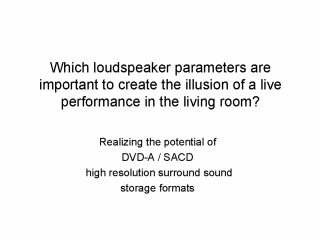
19 - Siegfried Linkwitz, Which loudspeaker parameters are important to create the illusion of a live performance in the living room?, 113th AES Convention, Los Angeles, 2002, October 5-8, Preprint 5637

Abstract
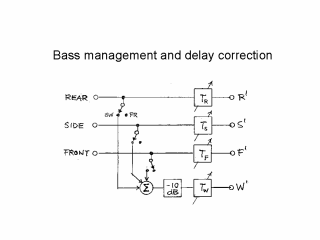
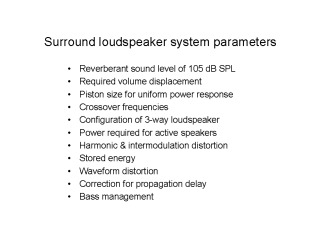
The preference in loudspeaker product design is for small size, while preserving maximum low frequency extension and output volume. If the goal is to create a realistic reproduction of a live event, then certain speaker parameters must be adequately controlled, such as volume displacement, intermodulation distortion, stored energy and off-axis frequency response. Components must be carefully selected for low distortion performance. Parameters like phase linearity and cabinet diffraction are sometimes overrated. Multi-channel speaker setups require propagation delay correction and bass management, if not all speakers cover the full frequency range. These issues are reviewed at the advent of high resolution surround sound. The new technology can only fulfill its promise and expand into more than a niche market, if capable loudspeakers are widely available.


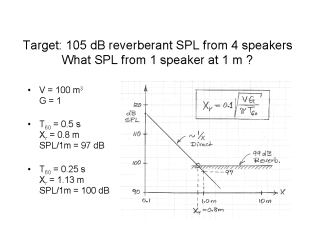
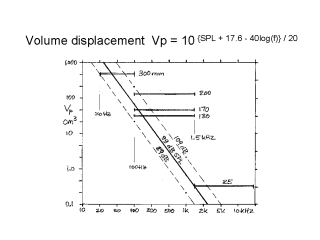
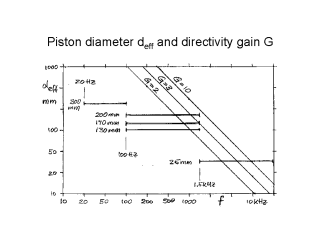
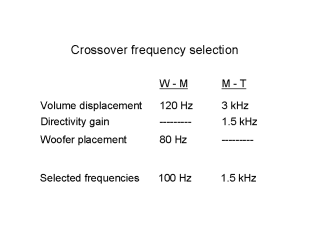
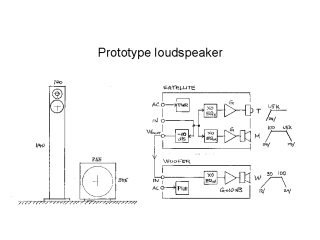
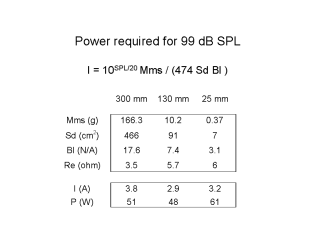
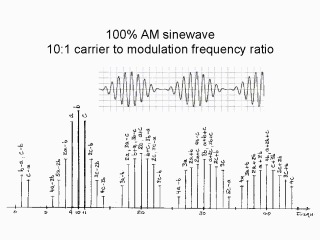
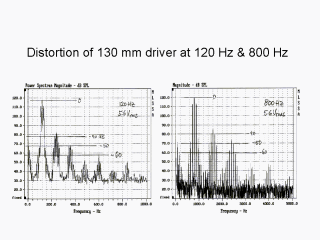
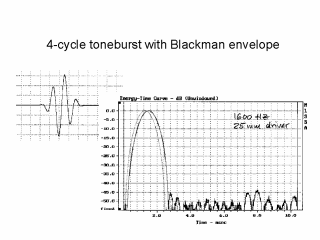
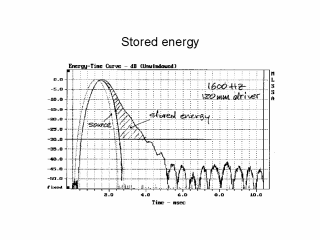
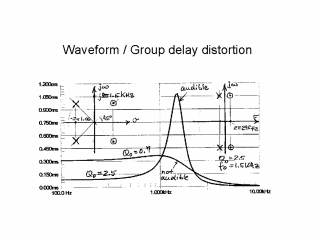
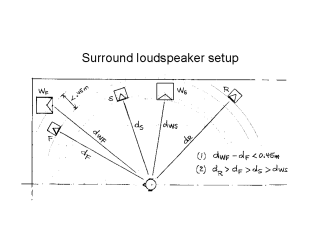
Overhead slides of the presentation.
| Publications |


What you hear is not the air pressure variation in itself 
but what has drawn your attention
in the two streams of superimposed air pressure variations at your eardrums

___________________________________________________________
Last revised: 02/02/2012   -  © 1999-2011 LINKWITZ LAB, All Rights Reserved